Petra's Treasury (Al-Khazneh): The Story Behind Jordan's Icon
What is the Treasury at Petra (Al-Khazneh)? The full story — who carved it, why it's called the Treasury, what's inside, and how to see Jordan's icon.
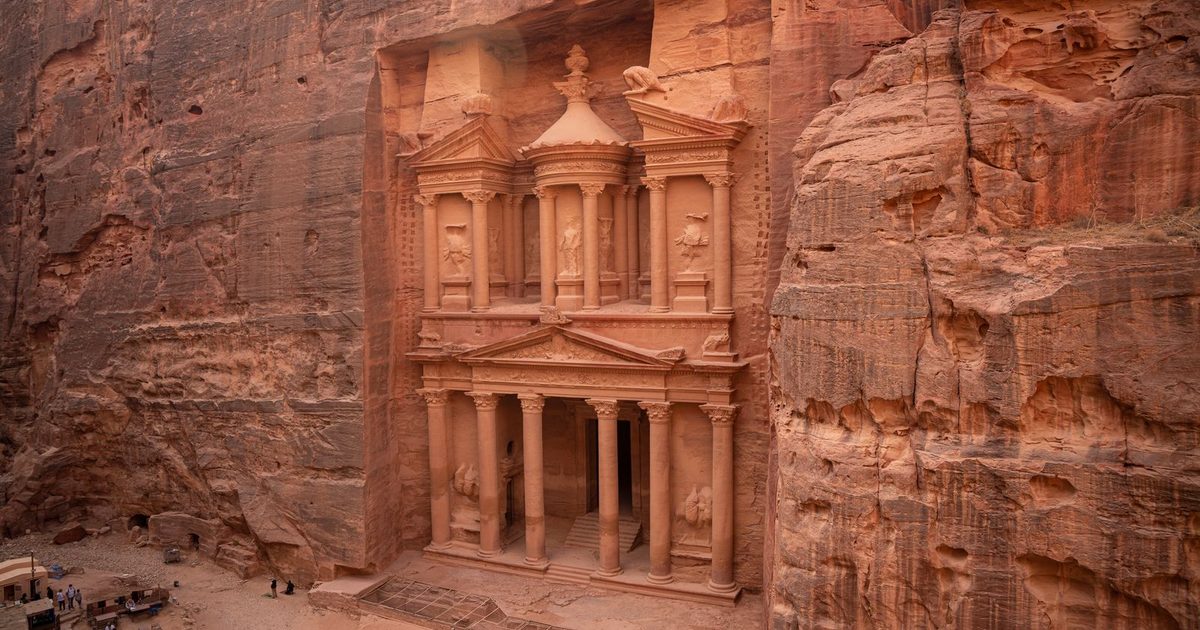
At the end of a narrow, shadowed gorge in southern Jordan, the cliff walls suddenly part to reveal one of the most breathtaking sights in the ancient world: a 40-metre rose-pink façade carved straight into the rock. This is Al-Khazneh — the Treasury of Petra — the most photographed monument in Jordan and one of the most recognisable ruins on Earth. Yet despite the name, it never held gold, and it was never a bank.
So what exactly is the Treasury at Petra, who carved it, and why is it called “the Treasury” if there is no treasure? This is the full story of Al-Khazneh — its Nabataean builders, the Bedouin legend behind its name, what is really inside, the wider city around it, and how to see it for yourself — plus the Jordanian-made tee that lets you carry a piece of Petra with you.
What is Al-Khazneh, the Treasury at Petra?
The Treasury is a monumental tomb carved directly into a sandstone cliff in Petra, the ancient capital of the Nabataean kingdom in what is now southern Jordan. Standing about 40 metres (131 feet) tall and 25 metres wide, it is the first grand monument you meet as you emerge from the Siq, the long canyon that guards the entrance to the city. Petra as a whole is a UNESCO World Heritage Site, and Al-Khazneh is its undisputed centrepiece.
The approach is half the magic. You reach the Treasury only after walking through the Siq, a winding fissure in the rock up to 180 metres deep and, in places, barely wide enough for two camels to pass. After roughly a kilometre of cool, echoing canyon, the walls finally crack open and a sliver of sunlit, carved façade appears in the gap ahead — arguably the most famous reveal in all of archaeology. No photograph quite captures the feeling of that first glimpse.
Petra is often called the “rose-red city” because the iron-rich sandstone glows pink, orange and red as the light shifts through the day. The Treasury's two-storey, Hellenistic-style façade — columns, a broken pediment and a great stone urn crowning the top — was not built block by block but carved from the top down out of the solid cliff, with no mortar. It is equal parts architecture and sculpture.
Who built the Treasury? The Nabataeans
The Treasury was created by the Nabataeans, a once-nomadic Arab people who grew immensely wealthy by controlling the caravan routes that carried frankincense, myrrh and spices between southern Arabia, Egypt and the Mediterranean. Petra sat at the crossroads of those routes, and tolls and trade made it one of the richest cities of the ancient Near East. You can read more about them at Britannica and National Geographic.
Most scholars date Al-Khazneh to the early 1st century AD, during the reign of King Aretas IV (9 BC – 40 AD), when Nabataean power was at its peak. The leading theory is that the Treasury was built as his royal tomb and mausoleum. The refined Hellenistic styling — Greek and Egyptian motifs blended into something distinctly Nabataean — shows just how far their trade contacts and influences reached.
What makes it astonishing is the method: the entire façade was cut by hand from a single rock face, working downward from the top so the carvers never had to scaffold over finished detail. A mistake could not be undone. The Nabataeans were master stonemasons — and the precision of the columns, capitals and figures shows a workshop operating at the height of its craft.
Their deepest genius, though, was water. In a desert that sees only a few centimetres of rain a year, the Nabataeans engineered an extraordinary network of dams, cisterns and ceramic pipes that captured flash floods and supplied a city of tens of thousands. You can still trace the carved water channels running along the walls of the Siq today. That command of a scarce, life-or-death resource is what created the wealth — and the security — to carve monuments like the Treasury in the first place.
Why is it called “the Treasury”?
The Arabic name Al-Khazneh means “the Treasury” (it is also known as Khaznet Fir'aun, the Pharaoh's Treasury). Crucially, the name is far younger than the monument itself — it comes from a Bedouin legend that an Egyptian pharaoh hid his treasure inside the giant stone urn that crowns the upper façade.
For generations, local Bedouin fired their rifles at that urn, hoping to crack it open and spill out the gold. The bullet marks still scar the stone today. No treasure was ever found, for a simple reason: the urn is solid sandstone, carved in place like the rest of the façade. There was never a hollow chamber inside it to hold anything at all.
What's really inside the Treasury?
Given the ornate exterior, the interior comes as a surprise: a large, bare hall roughly 12 metres square cut into the rock, with smaller side chambers and no carvings or decoration. That plainness is exactly why most archaeologists read it as a tomb or temple rather than a storehouse — there was nothing here to guard.
Visitors can no longer step inside; the Treasury has been closed to the public since the late 1990s to protect its fragile interior. The mystery deepened in 2024, when archaeologists discovered a hidden tomb holding twelve skeletons and grave goods beneath the Treasury floor — strong new evidence for its use as a burial site, and a reminder of how much of Petra is still unexcavated.
| Fact | Detail |
|---|---|
| Local name | Al-Khazneh (الخزنة) — “the Treasury” |
| Location | Petra, southern Jordan, at the mouth of the Siq |
| Built by | The Nabataeans |
| Approx. date | Early 1st century AD |
| Likely purpose | Royal tomb / temple, attributed to King Aretas IV |
| Height | ~40 m (131 ft) |
| Material | Rose-pink sandstone, carved in place |
| Rediscovered | 1812, by Johann Ludwig Burckhardt |
| Status | UNESCO World Heritage Site (1985); New7Wonder (2007) |
Petra is far more than the Treasury
As unforgettable as Al-Khazneh is, it is only the gateway to a vast city that once housed perhaps 20,000 to 30,000 people. Petra stretches for kilometres beyond the Treasury, and most visitors barely scratch the surface in a single day. Knowing what lies past the famous façade turns a quick photo stop into a proper expedition.
Beyond the Treasury, the canyon widens into the Street of Facades and, soon after, a Roman-era theatre carved into the hillside. The towering Royal Tombs line the eastern cliff, glowing at sunset. A colonnaded street marks the old city centre, leading to temples such as the Qasr al-Bint. And high above, reached by around 800 rock-cut steps, stands Ad-Deir — the Monastery, even larger than the Treasury and far less crowded.
Here are the highlights worth planning your day around:
- The Siq — the 1.2 km canyon entrance, with ancient water channels and carved “djinn blocks” along the way.
- The Treasury (Al-Khazneh) — the iconic façade at the end of the Siq.
- The Street of Facades & Royal Tombs — rows of monumental tomb fronts carved into the cliffs.
- The Monastery (Ad-Deir) — Petra's largest monument, an 800-step climb rewarded with calm and sweeping views.
- The High Place of Sacrifice — a clifftop altar with a panorama over the entire basin.
Lost and found: the rediscovery of Petra
After the Nabataean kingdom was absorbed by Rome in 106 AD and the great trade routes shifted, Petra slowly faded. A series of earthquakes damaged its buildings and water systems, and for centuries the city was lost to the outside world — known only to the local Bedouin who lived among its ruins and, understandably, kept its location to themselves.
That changed in 1812, when the Swiss explorer Johann Ludwig Burckhardt, travelling in disguise and speaking fluent Arabic, convinced a guide to lead him to the fabled “lost city” under the pretext of making a sacrifice at a nearby tomb. He became the first European in centuries to lay eyes on the Treasury, and his account brought Petra back to the world's attention. The Victorian poet John William Burgon later immortalised it as “a rose-red city half as old as time.”
One of the New Seven Wonders of the World
Petra was inscribed as a UNESCO World Heritage Site in 1985, described as “one of the most precious cultural properties of man's cultural heritage.” It remains one of the most significant archaeological sites on Earth, and only a fraction of it has been formally excavated.
Then in 2007, Petra was voted one of the New Seven Wonders of the World in a global poll of more than 100 million votes, alongside the Great Wall of China and Machu Picchu. That recognition sealed its status as a global icon and Jordan's most visited attraction, drawing roughly a million visitors a year in a strong season.
The Treasury on screen: Indiana Jones and beyond
For millions of people, their first glimpse of the Treasury came not in Jordan but in a cinema. Al-Khazneh played the exterior of the temple holding the Holy Grail in Indiana Jones and the Last Crusade (1989) — the “Canyon of the Crescent Moon” — one of the most famous location reveals in film history.
It has since appeared in Transformers: Revenge of the Fallen, Mortal Kombat: Annihilation, and countless documentaries, music videos and advertising campaigns. Each appearance has fed Petra's fame and turned the Treasury into instantly recognisable visual shorthand for “ancient wonder.”
What Petra means to Jordan today
For Jordanians, Petra is far more than a tourist attraction — it is a source of national pride and a symbol of identity. The Treasury's silhouette appears on banknotes, stamps, tourism campaigns and countless logos; it is shorthand for Jordan itself, the way the Eiffel Tower stands for France or the pyramids for Egypt.
Petra is also the backbone of Jordan's tourism economy, drawing visitors from every continent and supporting whole communities around the town of Wadi Musa. Celebrating it — and wearing it — is a small way of carrying that heritage forward. That is exactly the spirit behind our Jordan T-Shirts collection: original designs of the places that make the Kingdom unforgettable.
How to see the Treasury at Petra
Standing in front of Al-Khazneh is a rite of passage for any trip to Jordan. A few tips to make the most of it:
- Walk in through the Siq. The 1.2 km sandstone gorge from the visitor centre builds the suspense — the Treasury first appears as a thin sliver of carved rock between towering cliffs.
- Go early or late. Arrive near opening (around 6 am) or in the late afternoon for softer light, cooler temperatures and far thinner crowds than midday.
- Climb to a viewpoint. Marked Bedouin trails lead to ledges high above the Treasury for the classic photograph looking down on the façade.
- Experience Petra by Night. On select evenings the Siq and Treasury are lit by some 1,500 candles — a separate ticket, but unforgettable.
- Give it more than a day. A single day covers the Treasury and a little beyond; two days lets you reach the Monastery and the High Place without rushing.
- Get the Jordan Pass. It bundles your tourist visa with a multi-day Petra ticket and usually works out cheaper than paying for each separately.
Wear a piece of Petra
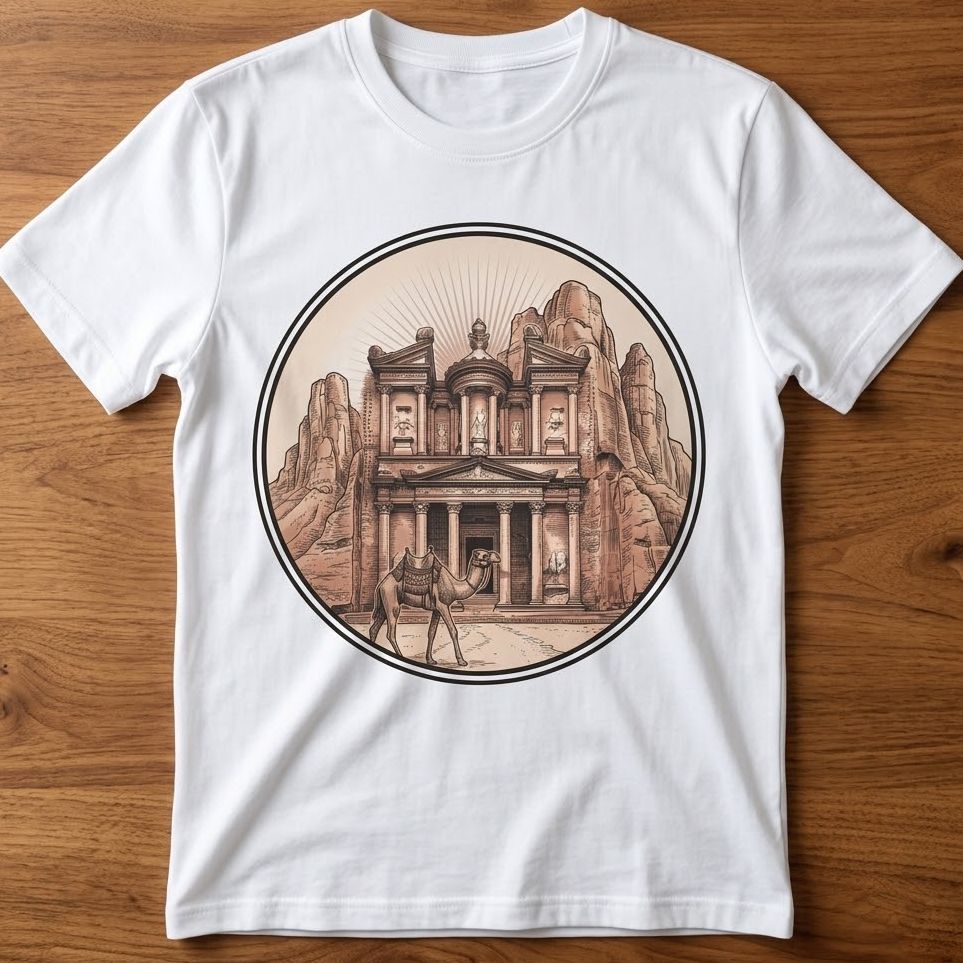
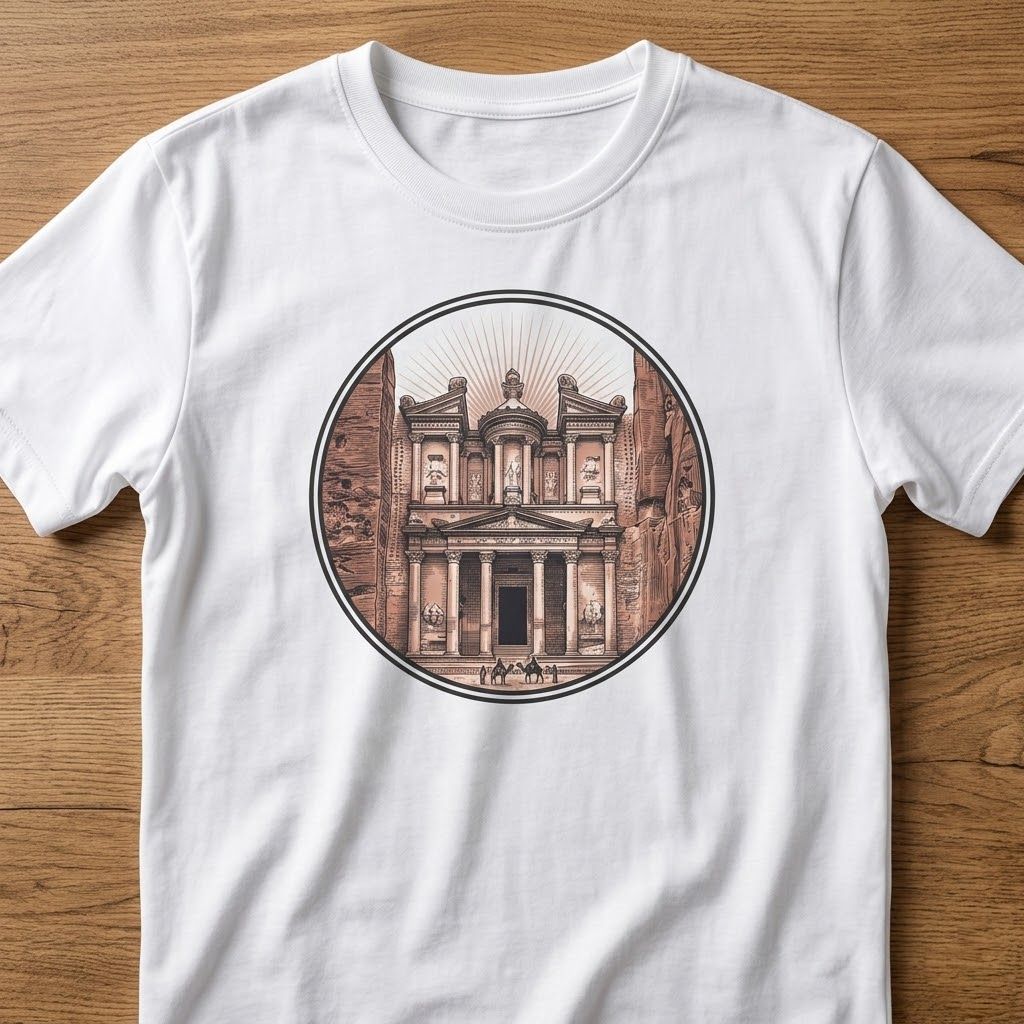
You don't have to be standing in the Siq to carry Petra with you. Our Petra T-Shirt features a hand-illustrated emblem of Al-Khazneh — the Treasury rising between the canyon walls, framed like a vintage seal — printed on soft 100% combed cotton with a relaxed unisex fit. It is part of our Jordan T-Shirts collection celebrating the Kingdom's landmarks, designed in Jordan and delivered with cash on delivery across Amman and the whole country.
Whether you have watched the sun rise over the Treasury or you are still dreaming of the trip, it is a way to wear a piece of one of the world's great wonders.
Frequently Asked Questions
What is the Treasury at Petra?
Who built Petra's Treasury?
Why is it called the Treasury if there is no treasure?
Is there really treasure inside the Treasury?
Can you go inside the Treasury at Petra?
How tall is the Treasury at Petra?
How old is Petra's Treasury?
What was the Treasury actually used for?
What movie was filmed at the Petra Treasury?
Is Petra one of the Seven Wonders of the World?
How long do you need to visit Petra?
When is the best time to see the Treasury?
Where is Petra located?
Shop This Post
 -25%
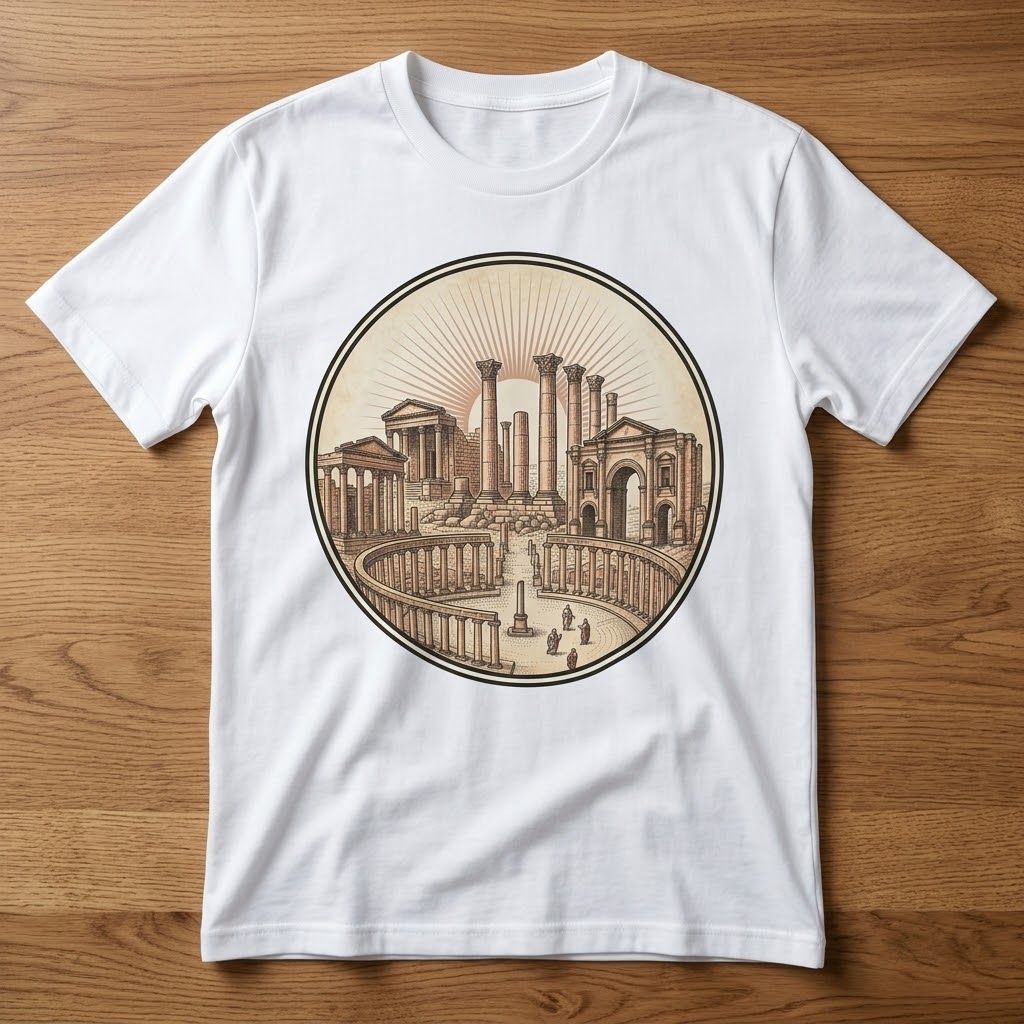
-25% Jerash T-Shirt – Roman Ruins of Jordan Graphic Tee
 -25%
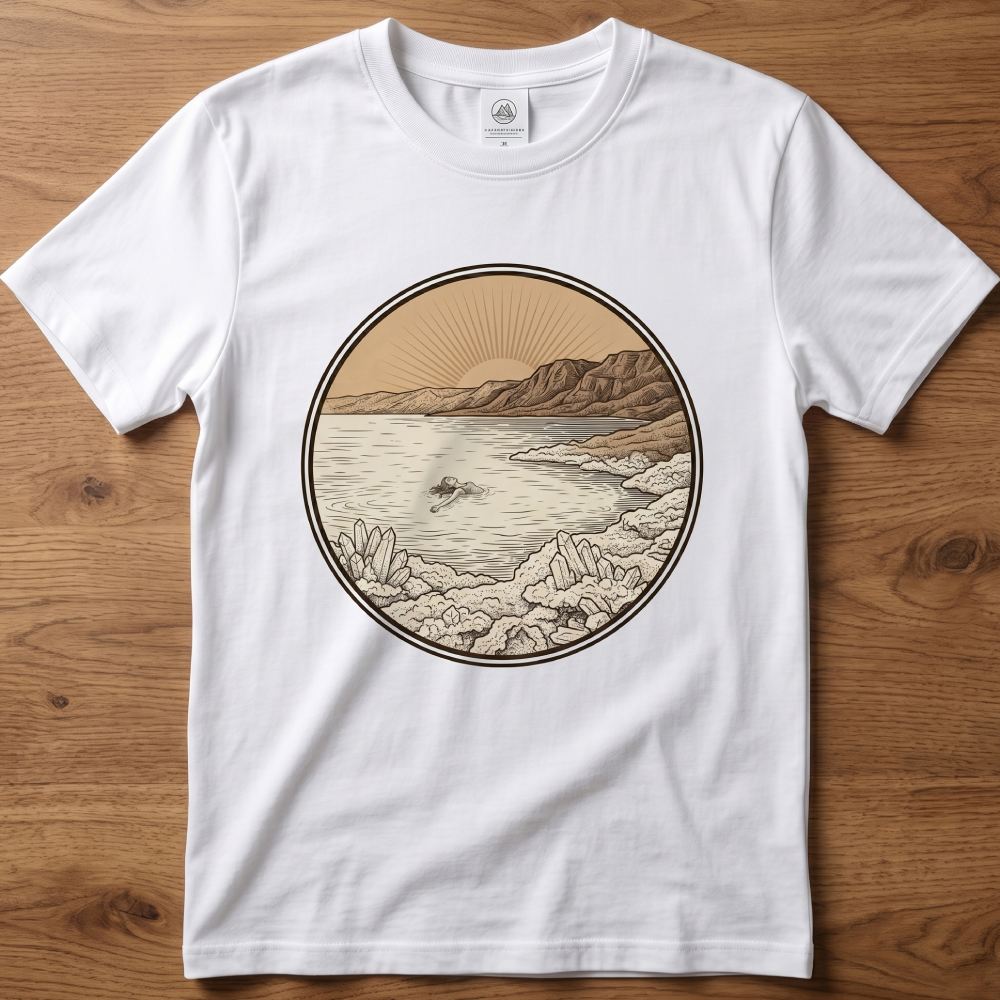
-25% Dead Sea T-Shirt – Lowest Point on Earth Jordan Tee
 -25%
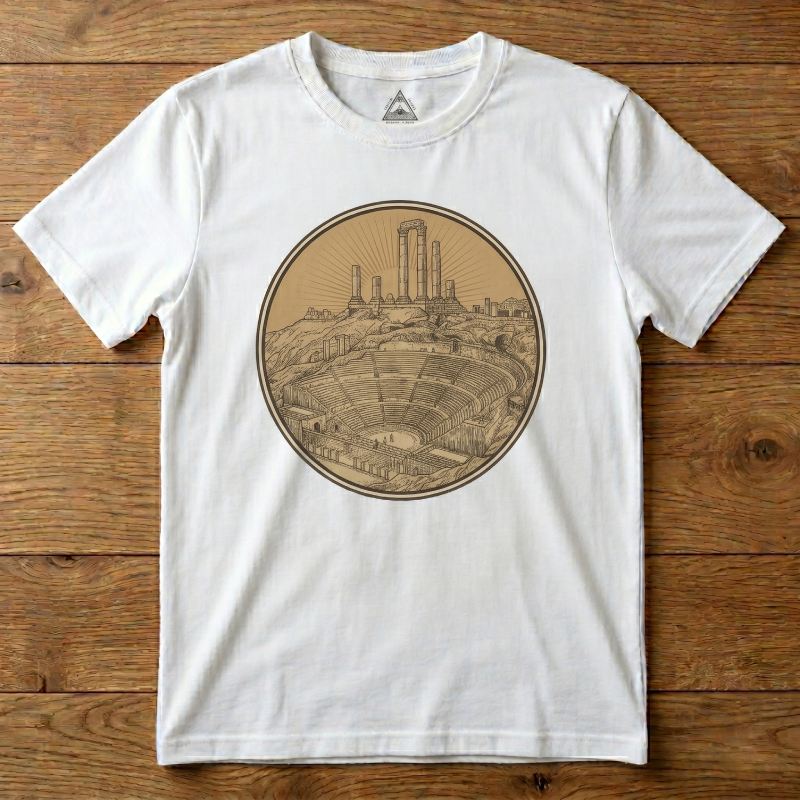
-25% Amman T-Shirt – Citadel & Roman Theatre Jordan Tee
 -25%
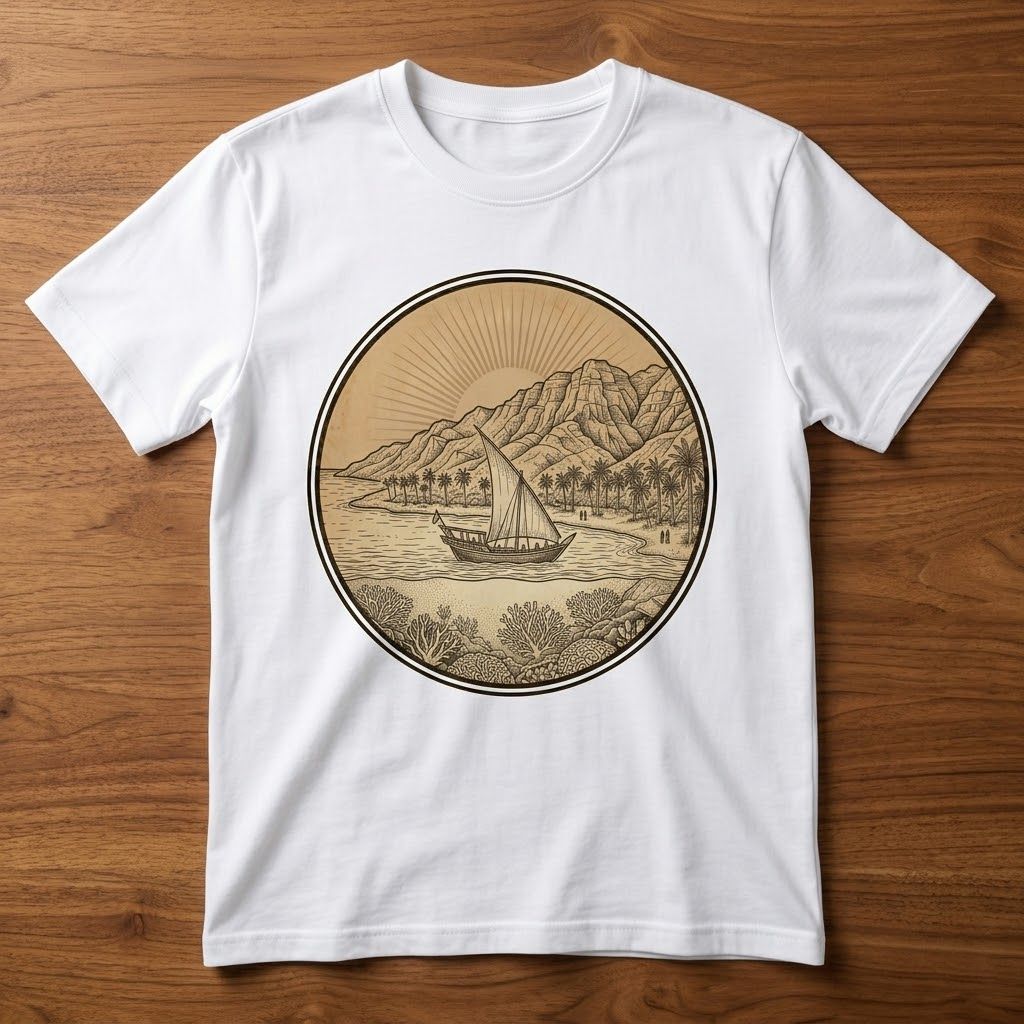
-25% Aqaba T-Shirt – Red Sea Jordan Coast Graphic Tee
 -25%
-25% I Love Jordan T-Shirt – Jordan Pride Graphic Tee
 -25%
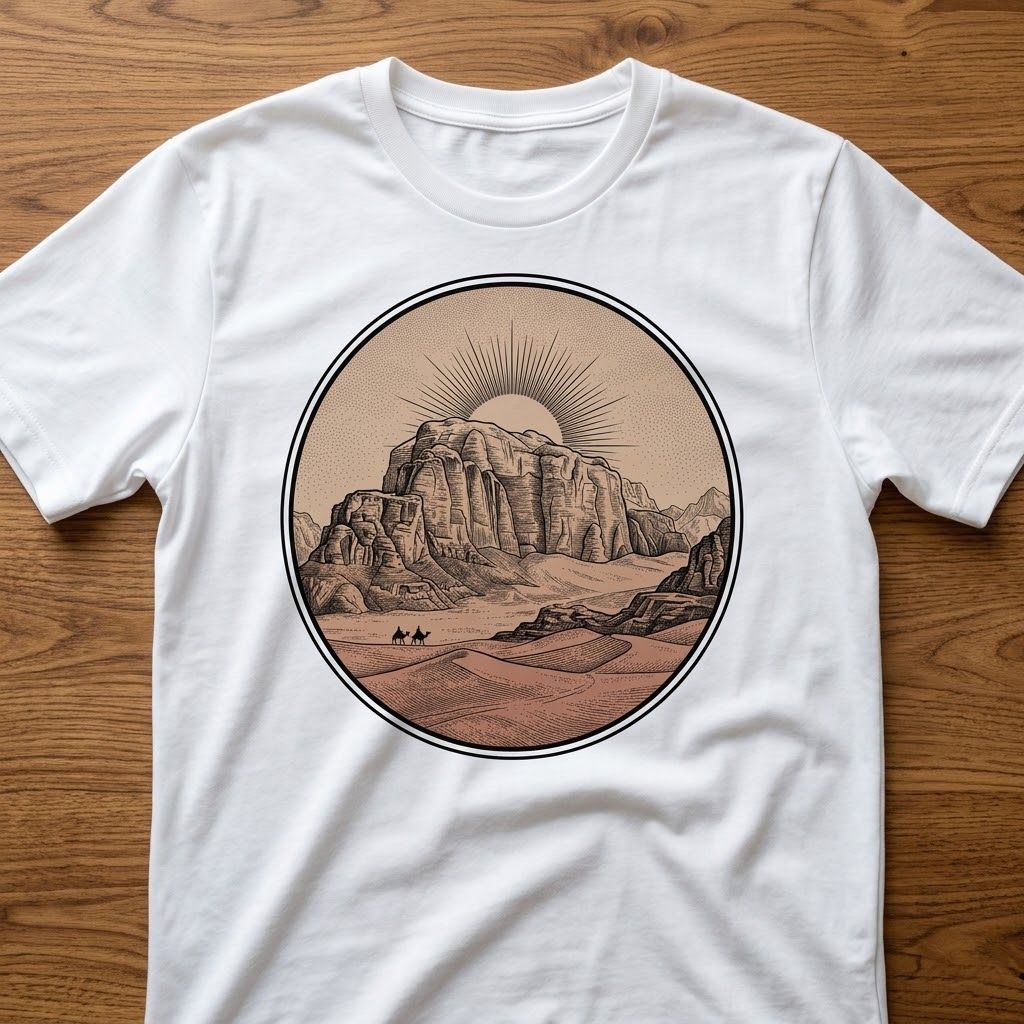
-25% Wadi Rum T-Shirt – Valley of the Moon Jordan Desert Tee
 -25%
-25%